Brief history
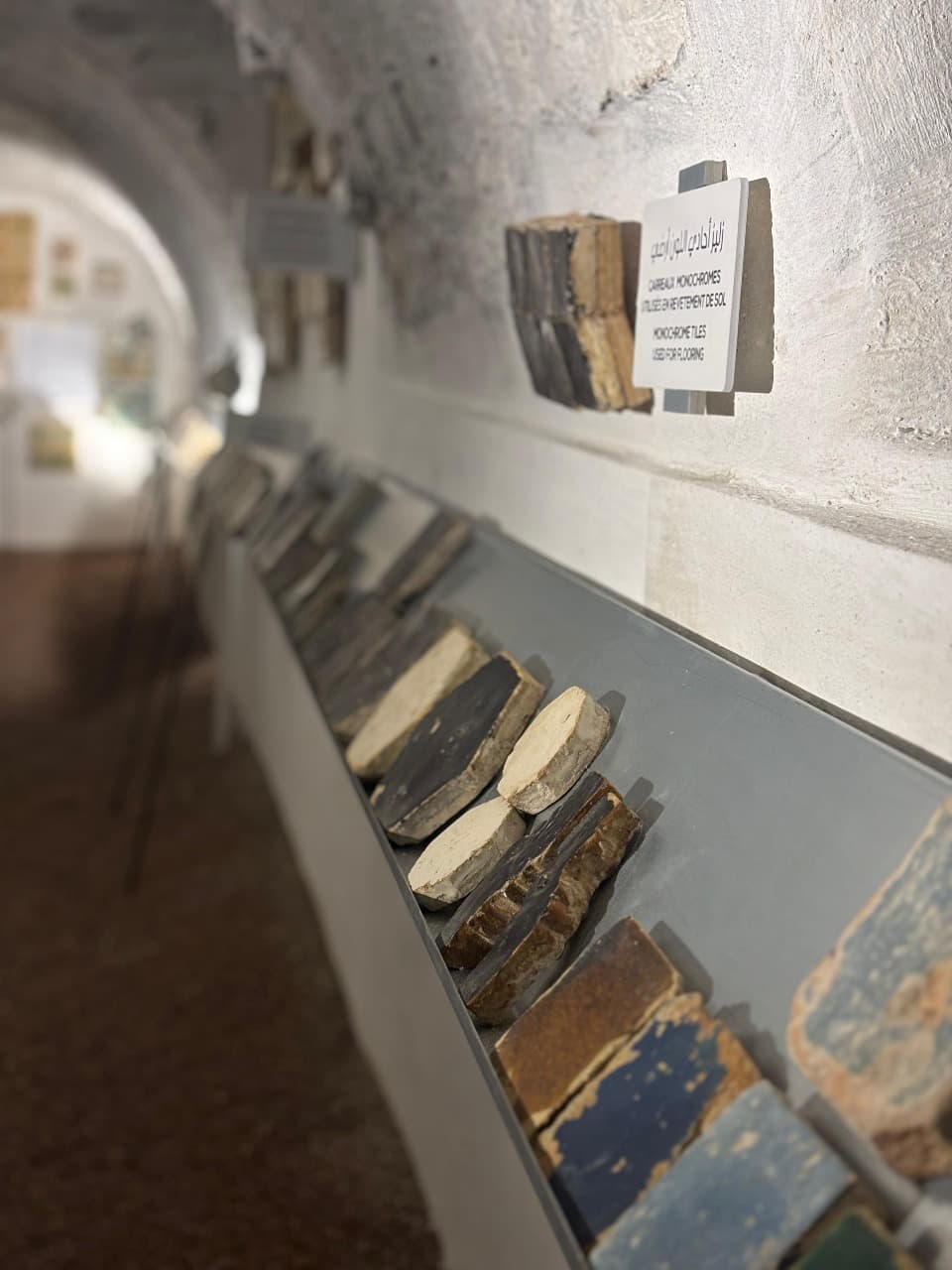
Hafsid Era - 13th to 16th
Appearance of enameling and production of small monochrome enameled ceramic tiles, used to decorate mosques and palaces. From the 13th century (or 11th according to some sources), small monochrome geometric tiles decorated funerary steles. Between the 13th and 15th centuries, widespread use of ceramic marquetry (ceramic mosaic), called “thofri” in Tunisia, “alicatado” in Spain, and “zellij” in Morocco. In the 15th century, introduction of “cuerda seca” in Ifriqiya by Sidi Kacem El Jellizi, a technique characterized by contours drawn with a mixture of manganese brown and fat to separate the colors and obtain a precise rendering.
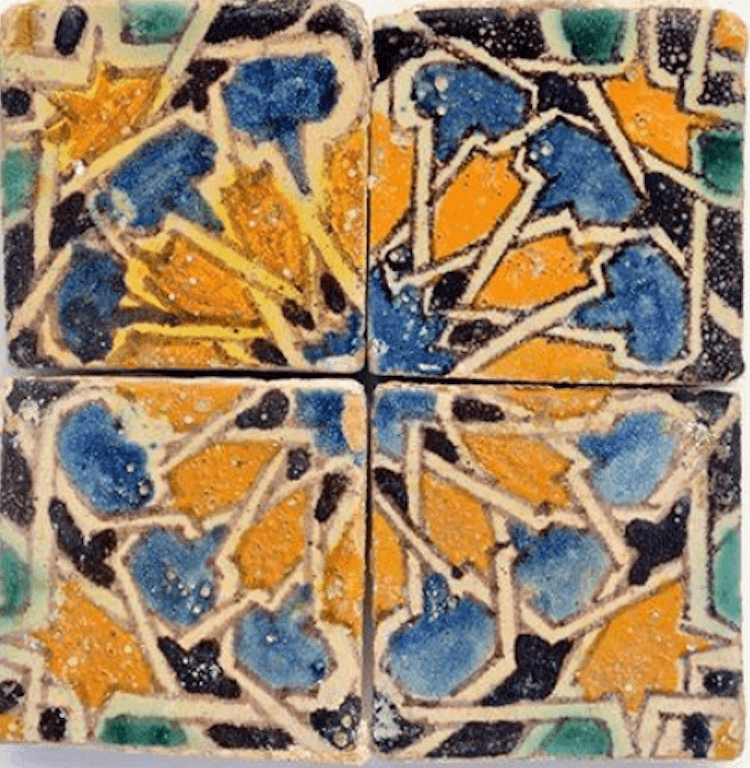
Mouradite Era - 17th to early 18th
The pseudo cuerda seca, a simpler and more economical version of the cuerda seca, became widespread.The Moriscos driven out of Spain after the Reconquest (1609-1614) settled in Tunis, in the workshops of Bab Souika, bringing new know-how and a renaissance Spanish decorative repertoire.Birth of the Qallaline style, characterized by a color palette that becomes clearer: copper oxide for green, cobalt for blue, antimony oxide for yellow and manganese for brown on a white tin background. Appearance of the Qallaline signature.Peak of the Qallaline style, which incorporates Ottoman influences while retaining Spanish motifs.Main decorative themes: Arabic calligraphy, floral motifs, arabesques, and false architecture in wall covering panels.
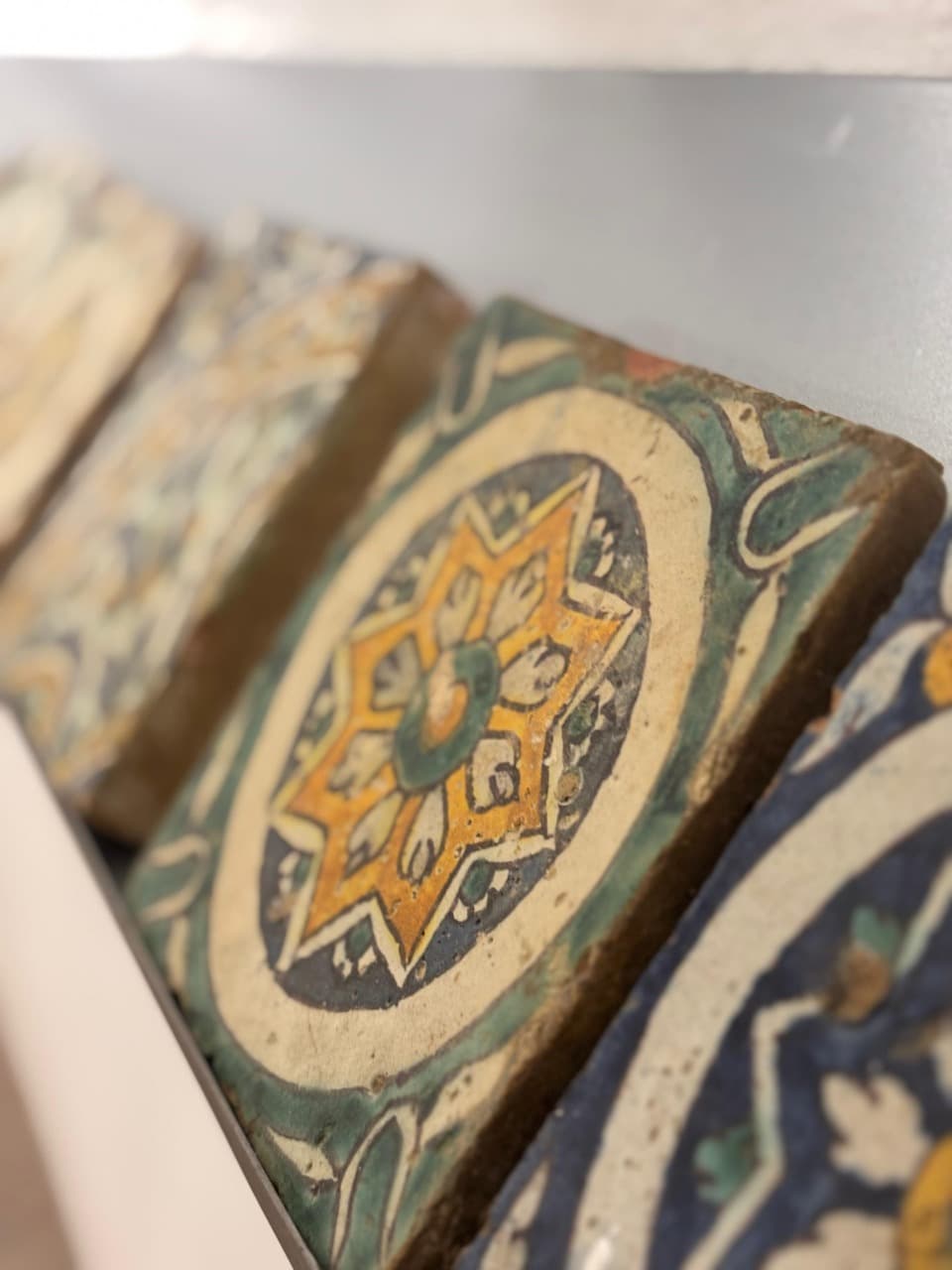
Husseinite Era - 18th to 20th
Under the reign of the Husseinite beys, Qallaline ceramics become an official art.Strong Ottoman influences with floral motifs and decorations inspired by Iznik, Tekfur and Kütahya ceramics.Intensive production of glazed tiles for official architecture.Development of new calligraphic and floral motifs of Turkish inspiration, but “Tunisified”.First half of the 19th century: Gradual decline in the face of competition from European industrial ceramics, mainly Sicilian and Neapolitan.Early 20th century: Final closure of the Qallaline workshops.
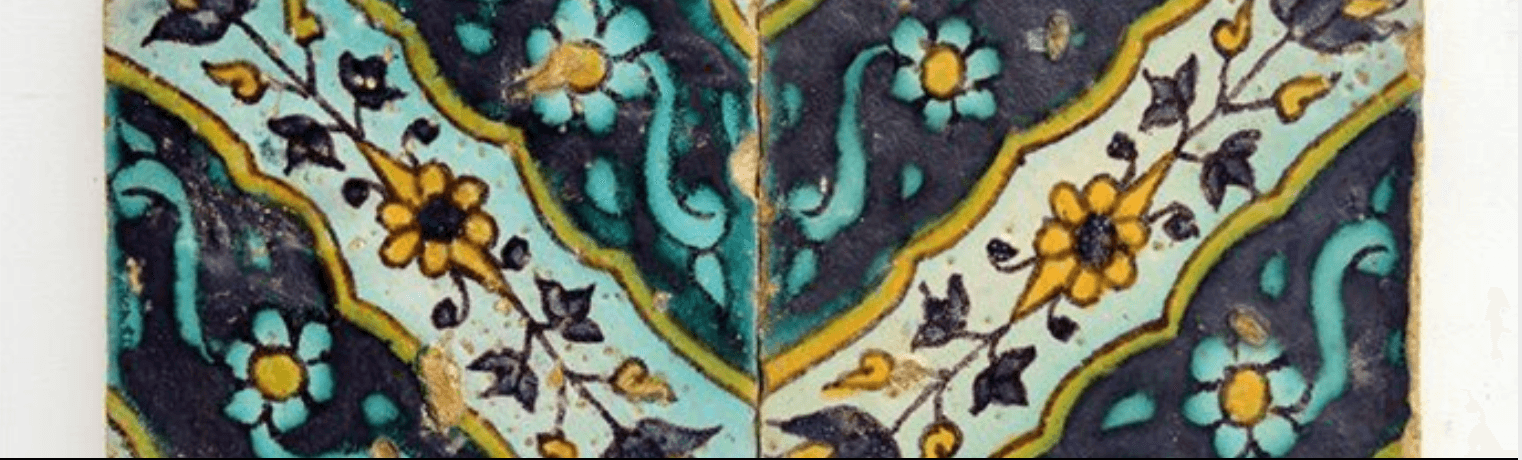
Quallaline
Despite the decline of Qallaline ceramics, it remain a strong symbol of Tunisian heritage, and a witness of the dialogue between the Muslim East and the Christian West. Today, between tradition and innovation, it continues to inspire contemporary artisans and creators.